
Gym Flooring Buying Guide: Materials, Thickness, Applications and Wholesale Purchasing
Introduction
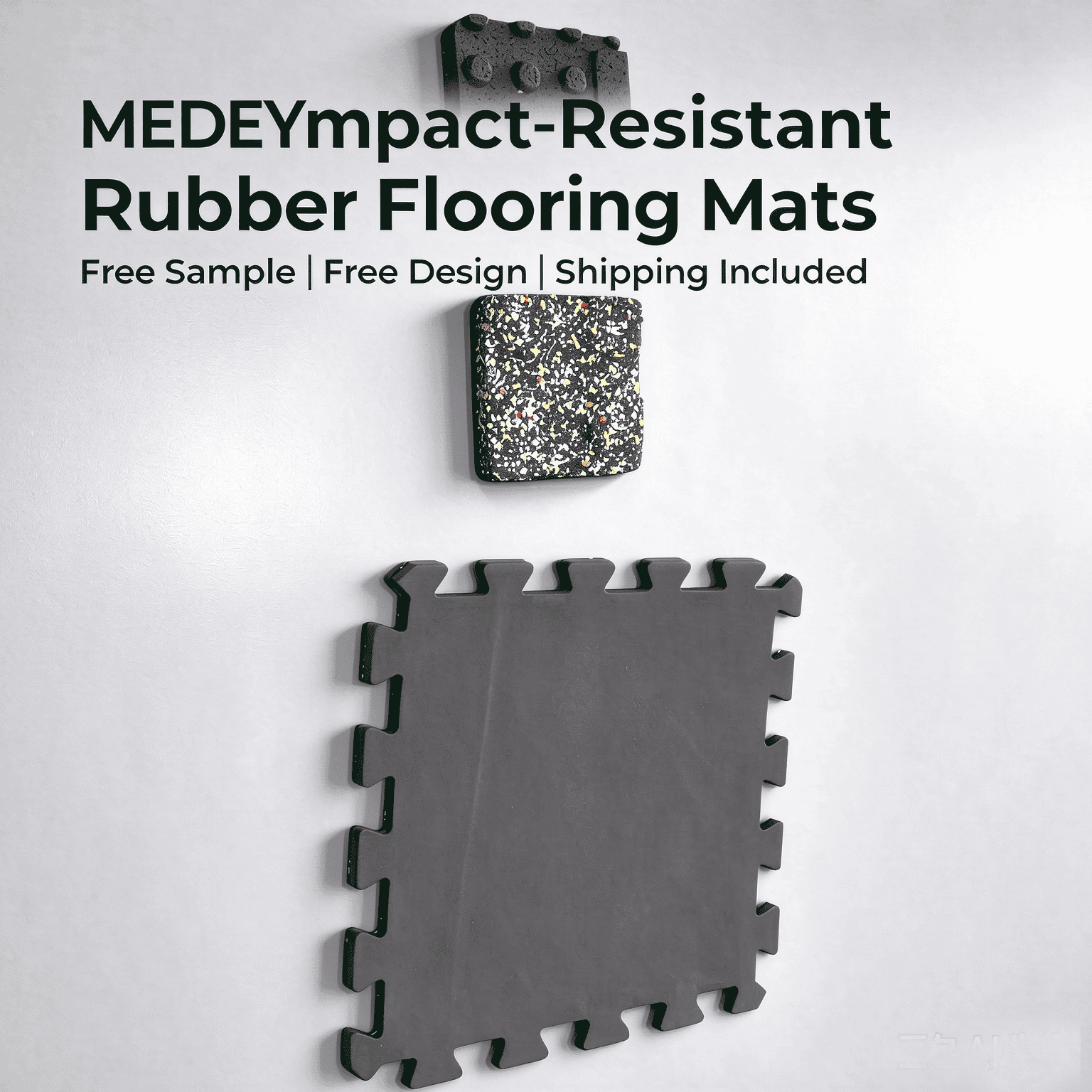
Choosing the right gym flooring is important for creating a safe, comfortable and durable workout environment. Whether you are opening a commercial gym, setting up a home fitness room, building a weightlifting area or equipping a martial arts training facility, the flooring material can make a significant difference.
Different fitness activities require different types of flooring. Rubber gym mats are widely used in commercial fitness centers and strength training areas because of their durability and impact resistance. Rubber and EVA composite mats provide a combination of a wear-resistant surface and a cushioned backing, making them suitable for home gyms and indoor fitness spaces.
Other materials, including EVA, PVC, TPE and NBR, are also commonly used for yoga, Pilates, stretching and general fitness exercises.
MEDEKY FITNESS supplies a range of fitness flooring products through our own manufacturing facilities and specialized partner factories in the surrounding industrial area. Our product range includes rubber gym flooring, rubber and EVA composite mats, rubber flooring rolls and different types of yoga mats.
In this guide, we explain the differences between gym flooring materials, how to select the right thickness, and what international buyers should consider when purchasing gym mats from China.
1. What Materials Are Gym Floor Mats Made Of?
Gym floor mats are manufactured using different materials according to their applications.
Rubber
Rubber is one of the most common materials for commercial gym flooring. It is widely used in weightlifting areas, fitness centers and strength training rooms.
Rubber flooring is available in solid rubber, recycled rubber particle constructions and composite structures.
Rubber and EVA Composite
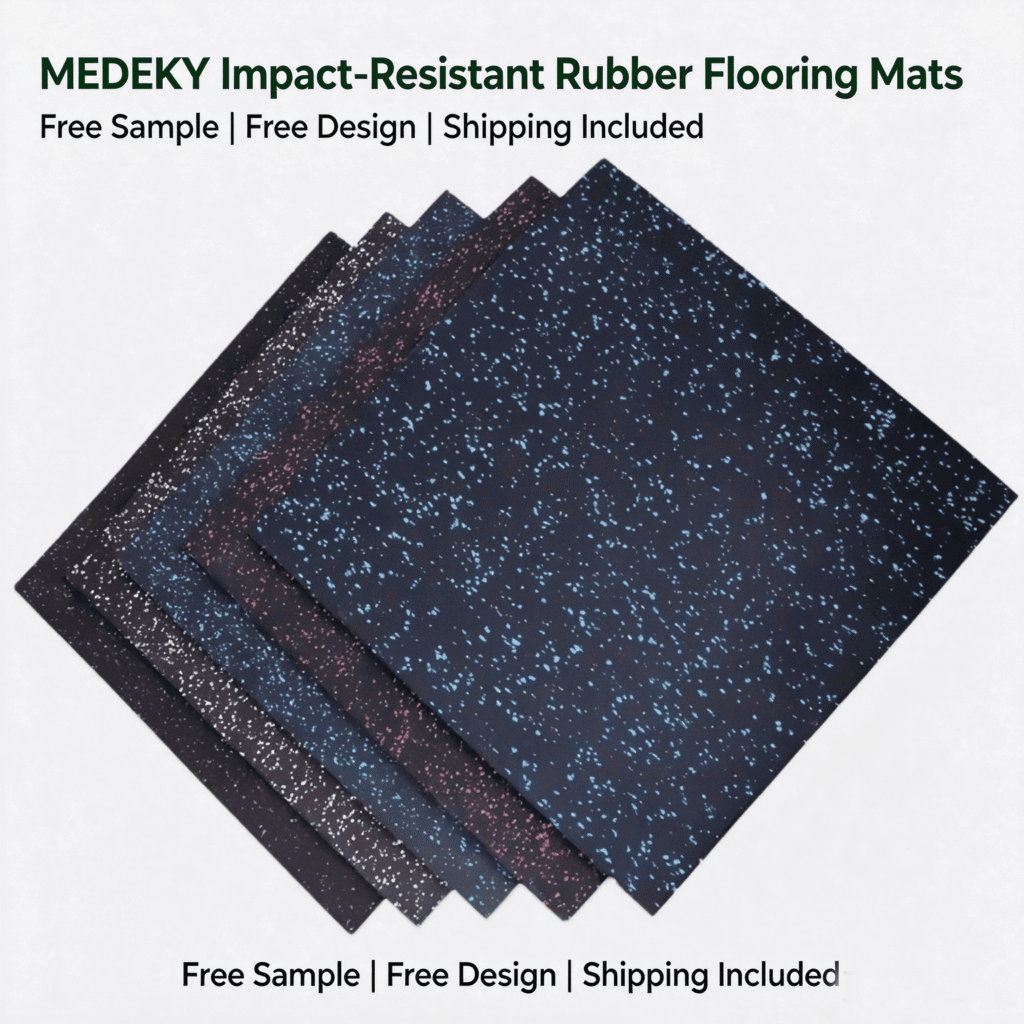
Rubber and EVA composite mats combine a rubber surface with an EVA foam backing.
The rubber layer provides a wear-resistant workout surface, while the EVA backing provides cushioning and helps reduce impact noise and vibration.
EVA
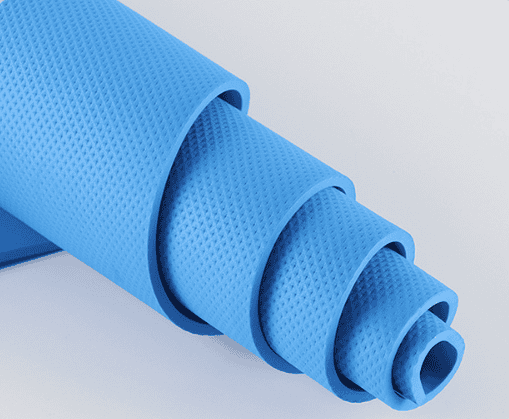
EVA is a lightweight foam material commonly used for interlocking fitness mats, home exercise flooring and yoga accessories.
PVC
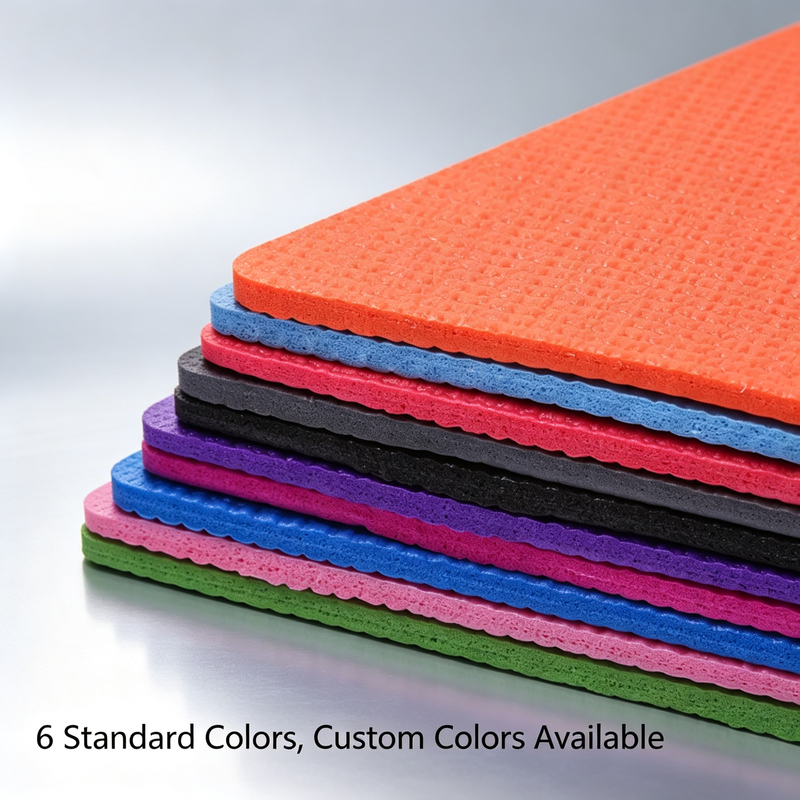
PVC is widely used for yoga mats and general exercise mats. It is flexible, lightweight and available in different colors and surface textures.
TPE
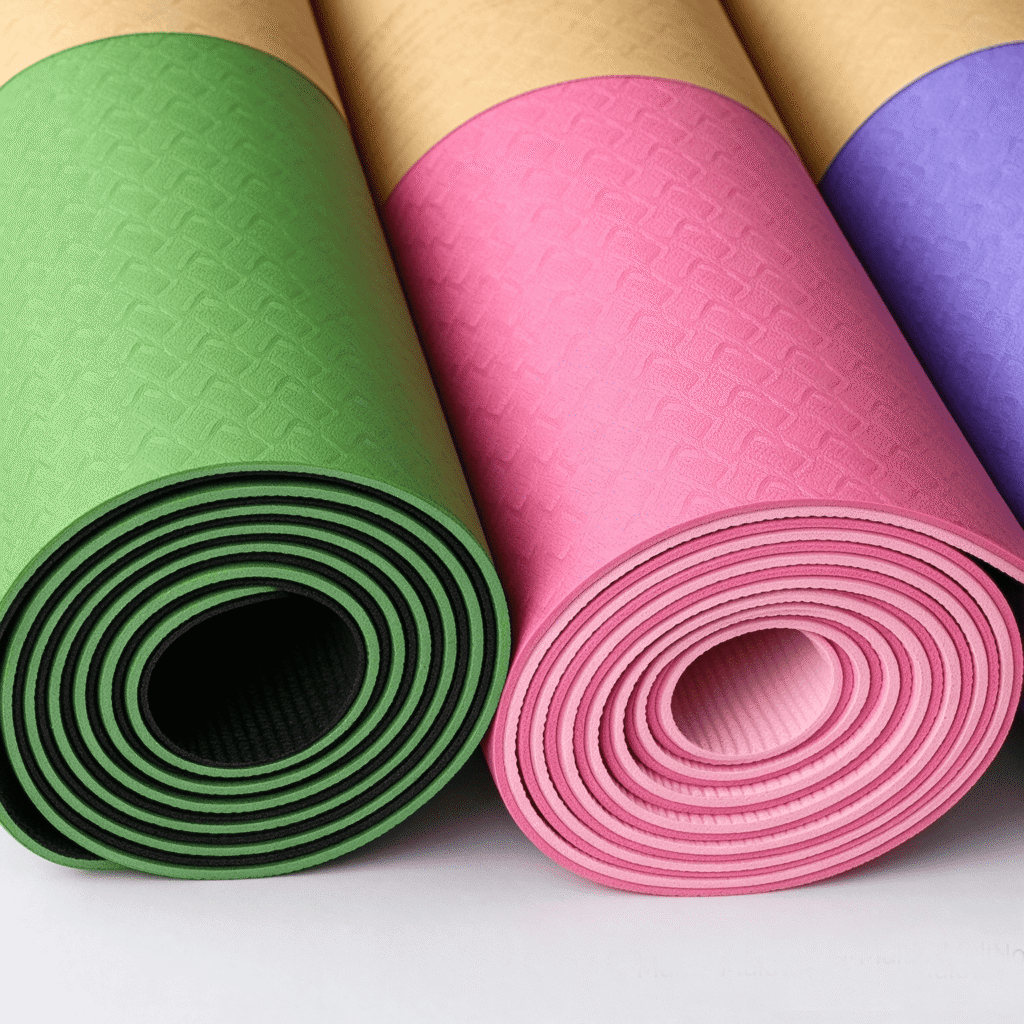
TPE is commonly used for yoga mats because of its flexibility, elasticity and comfortable exercise surface.
NBR
NBR foam mats are generally soft and cushioned. They are commonly used for Pilates, stretching and home fitness exercises.
The best material depends on the intended application, equipment weight, required cushioning and purchasing budget.
2. What Is the Difference Between Rubber Mats and EVA Mats?
Rubber and EVA mats have different physical properties.
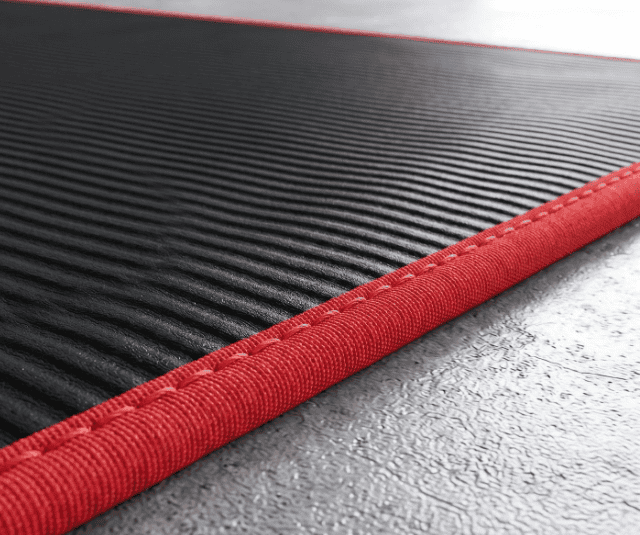
Rubber mats are generally denser and heavier, making them more suitable for commercial gyms, strength training and areas with heavier fitness equipment.
EVA mats are lightweight, soft and easy to install. They are commonly used for home workouts, stretching and general fitness activities.
MEDEKY also supplies rubber and EVA composite mats that combine these two materials.
For example, our 10mm composite mat features a 2mm rubber surface and an 8mm high-density EVA backing. The rubber surface provides wear resistance, while the EVA layer provides cushioning and helps reduce noise and vibration.
This construction offers a practical solution for home gyms and indoor fitness areas.
3. Are Rubber Gym Mats Better Than PVC or EVA Mats?
No single material is best for every fitness application.
Rubber flooring is generally more suitable for commercial gyms, weightlifting and heavy fitness equipment.
EVA flooring is more suitable for lightweight workouts and home fitness applications where cushioning and convenient installation are important.
PVC and TPE are commonly used for yoga, Pilates and stretching activities.
Consider the following applications:
- Commercial gyms: Rubber composite flooring.
- Home gyms: Rubber and EVA composite mats.
- Weightlifting areas: Thick rubber gym flooring.
- Yoga and Pilates: PVC or TPE yoga mats.
- General floor exercises: EVA or NBR exercise mats.
Choosing the right flooring requires considering the exercise type, impact intensity, floor protection and expected service life.
4. What Is the Difference Between Solid Rubber Mats and Rubber Mats with EVA Backing?
Solid rubber mats are made primarily from rubber material throughout the product. They provide a dense and firm surface suitable for many commercial gym applications.
Rubber mats with EVA backing use a layered construction.
MEDEKY’s rubber and EVA composite mat consists of:
- 2mm rubber surface.
- 8mm high-density EVA backing.
- 10mm total thickness.
The two layers are bonded using hot-melt adhesive lamination.
The rubber surface provides wear resistance and protection against everyday equipment scratches. The EVA backing provides additional cushioning and helps reduce impact noise and vibration.
This combination is especially useful in home fitness rooms and indoor workout areas.
5. Are Recycled Rubber Gym Mats Durable?
Yes. Recycled rubber flooring can be durable when the raw materials, particle sizes and production process are properly controlled.
Rubber particle flooring is commonly used in commercial gyms because it offers a practical balance of durability, impact absorption and cost.
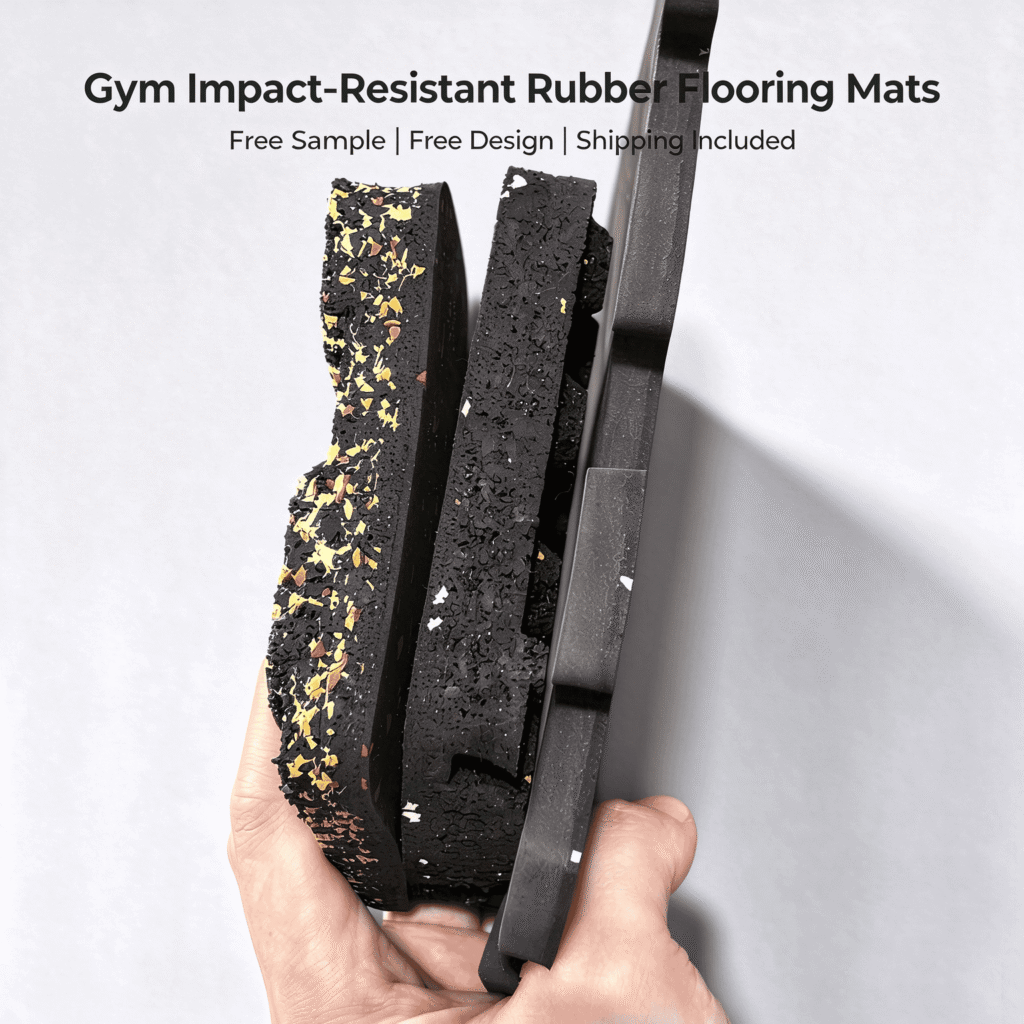
MEDEKY supplies composite rubber flooring with a rubber roll surface and a rubber particle backing. The backing is formed through high-temperature compression.
The product construction, thickness, material quality and installation conditions all influence its service life.
Buyers should request product samples and specifications before placing large wholesale orders.
6. What Thickness of Gym Flooring Do I Need?
The required thickness depends on the exercise type and equipment.
The following are general purchasing guidelines:
| Thickness | Typical application |
|---|---|
| 3–6mm | General floor protection and light fitness |
| 8–12mm | Home gyms and moderate exercise |
| 20mm | General commercial gym flooring |
| 25mm | More demanding strength training |
| 30mm | Applications requiring additional cushioning |
MEDEKY supplies 10mm rubber and EVA composite mats, 20mm, 25mm and 30mm rubber composite flooring, and rubber flooring rolls in 3–12mm thickness.
Thickness alone does not determine impact performance. Material density and construction should also be considered.
7. What Is the Best Thickness for Home Gym Flooring?
Home gym flooring should be selected according to the equipment and training activities.
For light workouts, stretching and general fitness, thinner exercise mats may be sufficient.
For home gyms with dumbbells, exercise bikes and weight benches, 10mm rubber and EVA composite mats can provide a useful combination of surface protection and cushioning.
The 2mm rubber surface helps resist everyday wear, while the 8mm EVA backing provides cushioning.
For heavier strength training and repeated weight drops, thicker rubber composite flooring may be more appropriate.
8. What Thickness Is Recommended for Commercial Gym Flooring?
Commercial gym flooring should be selected according to the training zone.
Cardio equipment areas require stable flooring that helps protect the original floor from scratches and equipment movement.
General fitness areas may use moderate-thickness rubber flooring.
Strength training and weightlifting areas generally require thicker rubber flooring to provide additional impact absorption.
MEDEKY offers 20mm, 25mm and 30mm rubber composite mats for different commercial gym applications.
The actual selection should consider equipment weight, training intensity and impact requirements.
9. What Is the Standard Size of Rubber Gym Mats?
Gym flooring is available in different dimensions depending on its construction.
MEDEKY supplies the following formats:
Rubber and EVA Composite Mats
- 30 × 30cm basic interlocking format.
- Other sizes can be customized.
Rubber Composite Interlocking Mats
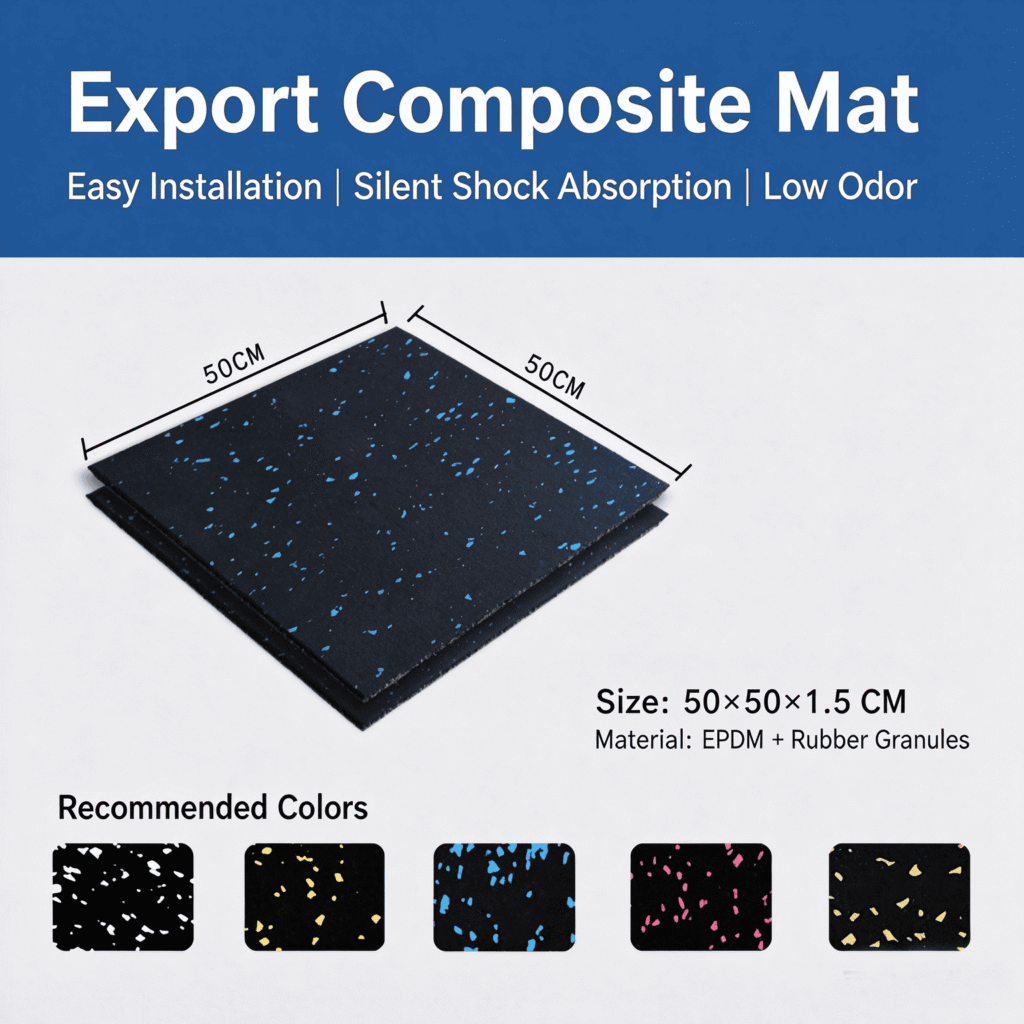
- 500 × 500mm.
- 1000 × 1000mm.
Rubber Flooring Rolls
- 1-meter standard width.
- 3–12mm thickness.
- Customizable length.
For large projects, buyers should confirm tile dimensions, total floor area and installation requirements before ordering.
10. Can Gym Floor Mats Be Customized in Size and Thickness?
Yes. Different gym flooring products offer different customization options.
MEDEKY supplies rubber and EVA composite mats, rubber composite interlocking mats and rubber flooring rolls.
Available specifications include 20mm, 25mm and 30mm rubber composite mats, as well as 3–12mm rubber rolls.
Rubber rolls have a standard width of 1 meter, while their length can be customized according to customer requirements.
Other product dimensions can be discussed according to the manufacturing capabilities of the selected factory.
11. Do Rubber Gym Mats Absorb Impact from Dropped Weights?
Rubber gym flooring can absorb part of the impact generated by dumbbells, kettlebells and barbells contacting the floor.
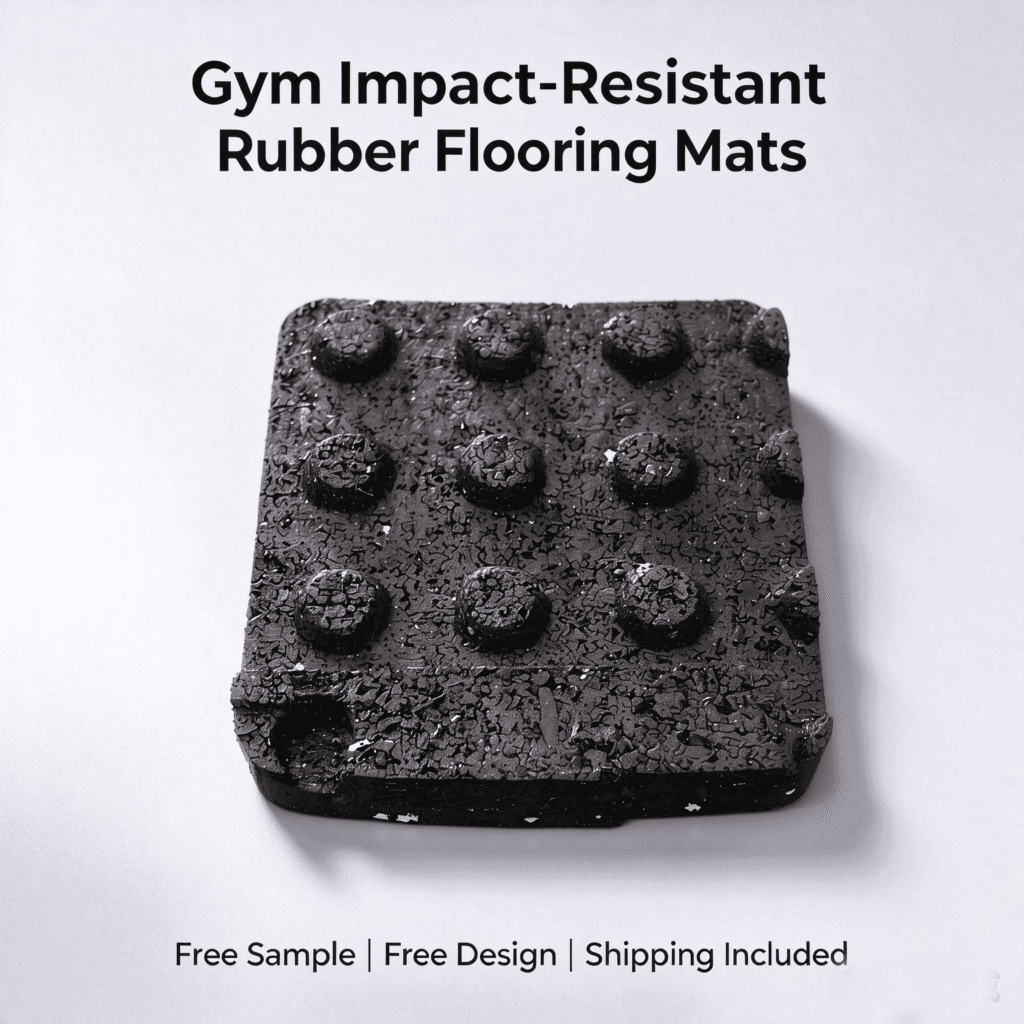
MEDEKY’s 20mm, 25mm and 30mm rubber composite flooring uses a thick rubber particle backing with a concave structure.
This construction helps absorb impact and reduce vibration transmission.
For home fitness areas, our rubber and EVA composite mats provide additional cushioning through the EVA backing.
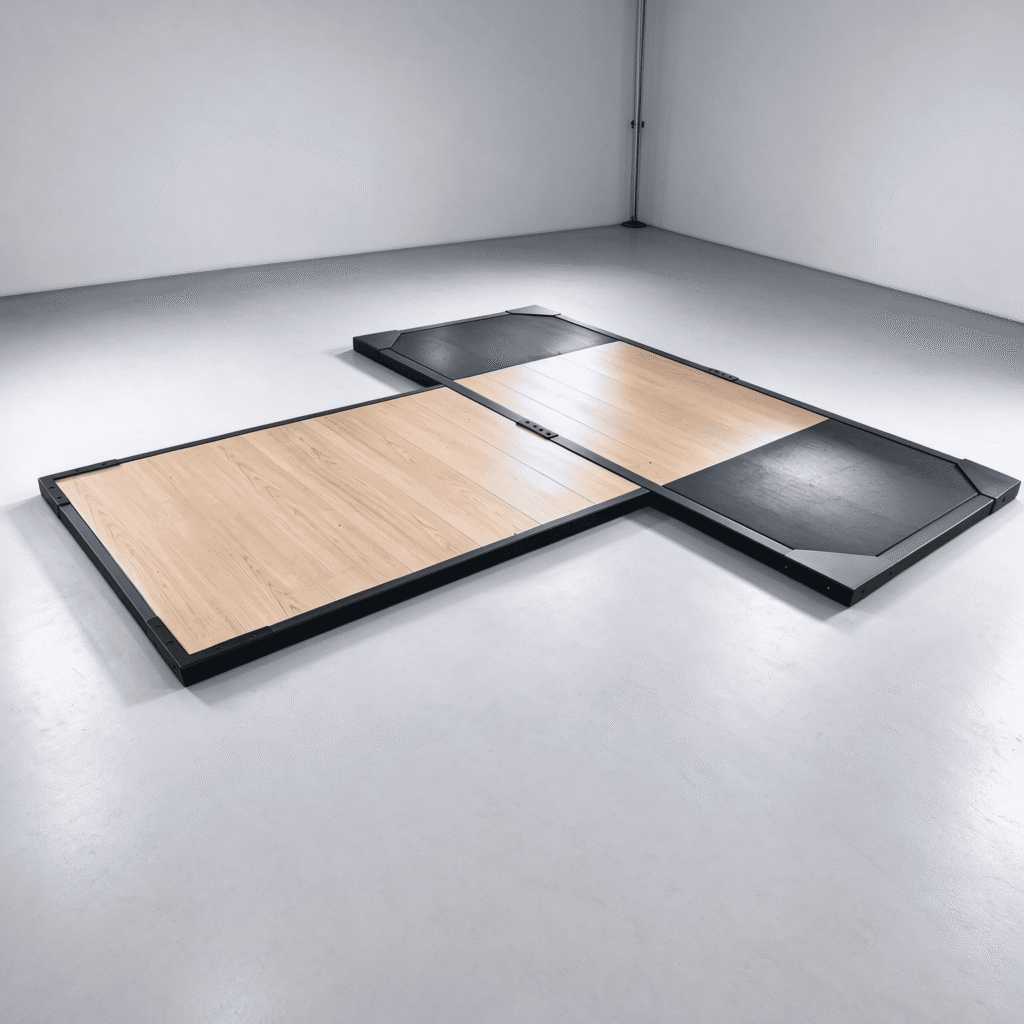
For repeated heavy barbell drops, buyers should consider specialized weightlifting platforms or thicker impact-resistant flooring.
12. Are Gym Floor Mats Suitable for Heavy Weightlifting Equipment?
Suitable rubber flooring can be installed underneath weightlifting benches, dumbbell racks, strength machines and other gym equipment.
MEDEKY’s 20–30mm rubber composite mats are designed for demanding gym flooring applications.
The rubber surface provides a durable contact area, while the rubber particle backing helps absorb impact.
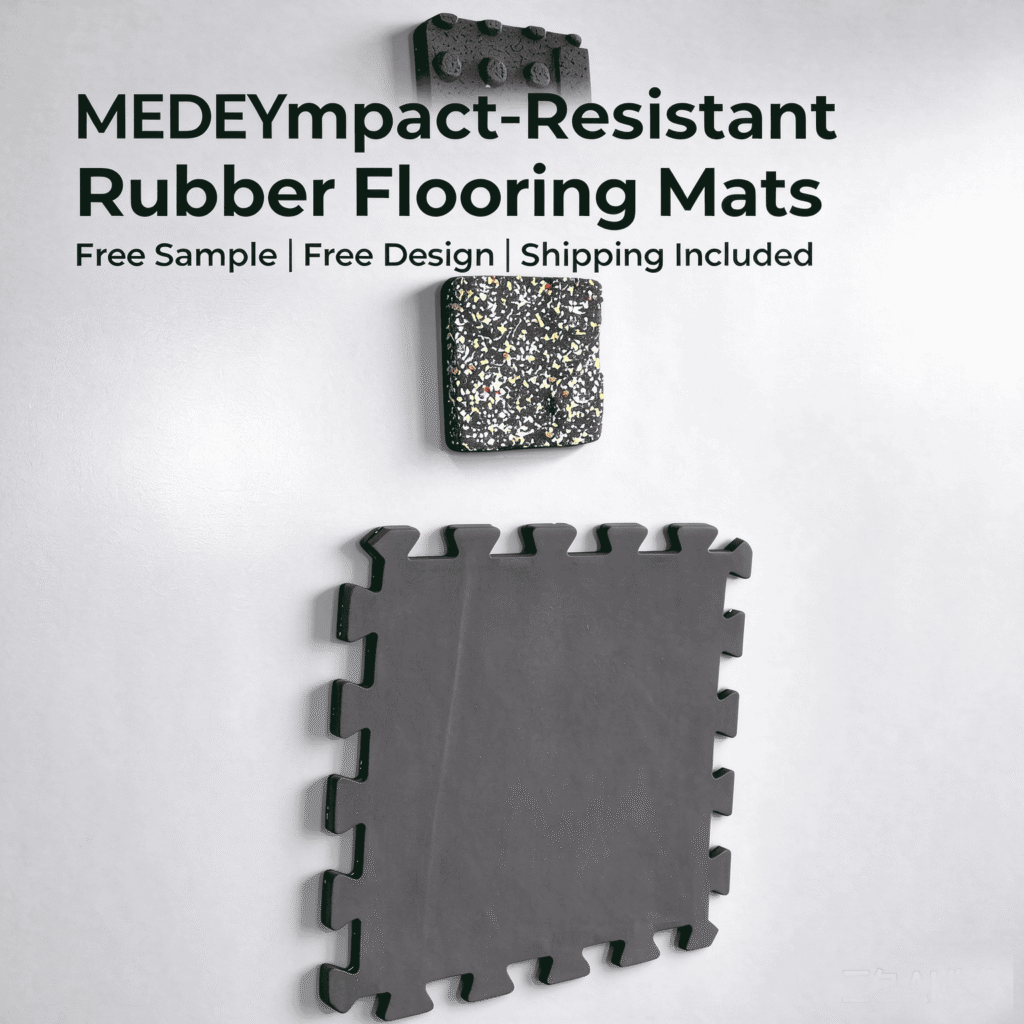
The plastic buckle connection system links individual tiles to create a more stable flooring area.
For extremely heavy equipment, the floor’s load-bearing capacity and concentrated load requirements should also be checked.
13. Do Rubber Mats Protect Floors from Scratches and Damage?
Yes. Rubber mats create a protective layer between fitness equipment and the original floor.
They help reduce scratches, abrasion and direct impact caused by dumbbells, exercise bikes, weight benches and other equipment.
The rubber surface of MEDEKY’s composite flooring provides protection against everyday wear and equipment scratches.
Thicker rubber flooring also provides additional material for cushioning and impact absorption.
14. Are Gym Mats Waterproof and Slip-Resistant?
Rubber gym mats generally offer good moisture resistance and grip, depending on their formulation and surface texture.
MEDEKY’s rubber and EVA composite mats have a rubber surface that resists water and sweat during normal fitness activities. Everyday sweat and dirt can be wiped away with a cloth.
Our composite rubber flooring is available in two surface designs:
- Round-dot textured rubber surface.
- Colored-speckled rubber surface.
The raised circular texture of the round-dot version provides additional friction.
For buyers, the surface design and intended exercise application should be considered when choosing gym flooring.
15. Do Gym Floor Mats Reduce Noise and Vibration?
Suitable gym flooring can help reduce noise and vibration caused by exercise equipment, jumping and strength training.
MEDEKY offers two composite flooring constructions.
Rubber and EVA Composite Mats
The 8mm high-density EVA backing provides cushioning and helps reduce impact noise and vibration transmission. This construction is suitable for home gyms and apartment fitness areas.
Rubber Composite Interlocking Mats
The 20mm, 25mm and 30mm rubber particle backing helps absorb impact from weights and reduce vibration transmission.
These products can also be considered for selected martial arts and training facilities.
Actual noise reduction depends on the floor structure, equipment, installation and training intensity. Flooring helps reduce noise but cannot eliminate all structural vibration.
16. Can Rubber Gym Mats Be Used on Ceramic Tiles or Wooden Floors?
Yes. Rubber gym flooring can generally be installed over suitable ceramic tiles, concrete and wooden floors.
The mats provide a protective layer between the fitness equipment and the original floor.
Before installation, the floor should be clean, dry and level.
For wooden floors, buyers should check the compatibility of the rubber material with the floor finish. Testing a small area first is recommended.
17. Do Rubber Gym Mats Have a Strong Smell?
Some rubber gym mats have a noticeable rubber smell when newly manufactured.
The smell depends on the raw materials, rubber formulation, production process and storage conditions.
For indoor fitness centers and residential applications, buyers should request samples and evaluate the smell before ordering large quantities.
Proper ventilation after installation can help reduce the initial odor.
18. Are Rubber Gym Mats Non-Toxic and Safe for Indoor Use?
The suitability of rubber gym mats for indoor use depends on their raw materials, additives and manufacturing quality.
Buyers should request relevant material information and test reports when purchasing flooring for commercial gyms, schools, residential projects or other indoor facilities.
Different markets may have different chemical and indoor-use requirements.
If you have specific compliance requirements, please provide them before ordering so the appropriate product can be checked.
19. Do EVA Gym Mats Contain Harmful Substances?
EVA is a widely used foam material for fitness mats, yoga mats and interlocking floor tiles.
The safety of a finished EVA product depends on its formulation, additives and manufacturing quality.
MEDEKY’s rubber and EVA composite mat uses an 8mm high-density EVA backing bonded to a 2mm rubber surface through hot-melt adhesive lamination.
Buyers with specific chemical or safety requirements should request material information and relevant test reports.
20. How Long Do Rubber Gym Mats Last?
The service life of rubber gym flooring depends on material quality, thickness, installation and frequency of use.
Important factors include:
- Rubber formulation and density.
- Product thickness.
- Frequency of use.
- Impact from dropped weights.
- Cleaning and maintenance.
- Installation conditions.
Regular cleaning and proper maintenance can help extend the service life of gym flooring.
21. Are Rubber Gym Mats Suitable for Martial Arts and Taekwondo Training Facilities?
Rubber gym mats and composite flooring can be considered for certain martial arts training areas where floor protection, cushioning and vibration reduction are required.
MEDEKY supplies 10mm rubber and EVA composite mats as well as 20–30mm rubber composite flooring.
The 10mm product combines a rubber surface with an EVA backing. The thicker rubber flooring uses a rubber particle backing to help absorb impact.
For activities involving frequent throws, falls, rolling or high-impact landings, buyers should select flooring specifically designed and tested for that sport. Ordinary gym flooring should not automatically replace professional martial arts mats.
22. How Should I Choose Between Rubber Flooring Rolls and Interlocking Mats?
Rubber flooring rolls and interlocking mats offer different installation options.
Rubber rolls are suitable for covering larger continuous areas. MEDEKY supplies rolls with a 1-meter width, 3–12mm thickness and customizable length.
Interlocking mats are connected tile by tile. They are convenient for flexible installation and individual replacement.
MEDEKY’s composite rubber interlocking mats are available in 500 × 500mm and 1000 × 1000mm sizes, with 20mm, 25mm and 30mm thickness options.
23. Can Gym Mats Be Purchased Wholesale from China?
Yes. MEDEKY supports wholesale purchasing for international importers, distributors, fitness retailers and commercial gym project buyers.
Our product range includes:
- Rubber gym flooring.
- Rubber and EVA composite mats.
- Rubber composite interlocking mats.
- Rubber flooring rolls.
- EVA, PVC, TPE and NBR yoga mats.
Customers can also discuss combining fitness mats with treadmills, exercise bikes, dumbbells, weight benches and other gym accessories.
24. What Is the MOQ for Wholesale Gym Mats?
The minimum order quantity depends on the product, dimensions, thickness, customization requirements and manufacturing arrangements.medeky fitness accept small order with different products in one container, you can buy gym weight machine, Cardio exercise Equipment, dumbbell, yoga accessories and also fitness mat together in one container.20ft container is about 26.5 cubic meter, 40hq container can load 66 cubic meter.If you can’t buy a full container, can accept mini order amount is more than 8000US dollar, LCL order price is higher than full container order.
Standard products is usually produce every week, so have stock usually.If you want to add logo, discuss with us by email:jelly@medekyfitness.com or sales1@medekyfitness.com
Please provide the product type, required specifications and estimated order quantity so our team can check the available wholesale options.CONTACT US – MDKGYMhttps://medekyfitness.com/contact-us/
25. Can Gym Mats Be Customized with a Private Label?
Depending on the product and manufacturing process, private-label options may include product logos, customized labels and branded packaging.
Buyers should confirm the logo application method, artwork and packaging requirements before mass production.
26. How Are Gym Mats Packed for Export?
Export packaging depends on product material, dimensions, thickness and shipping requirements.
Common options include individual plastic bags, shrink wrapping, carton packaging, bulk packaging and customized cartons.yoga mat is usually pack in brown pager carton, rubber mat pack in pallet.100*100cm size dojo mat is 4pcs in one set pack in plastic woven bag, yoga mat and Interlocking EVA floor mats is packed in brown pager carton.rubber gym mat is packed in pallet as picutre.


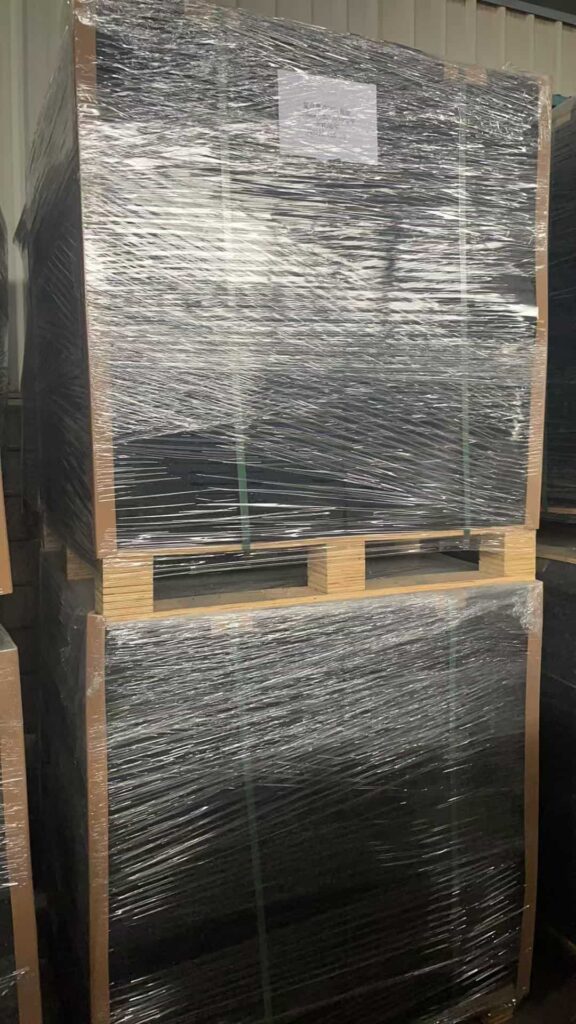
Rubber flooring is relatively heavy, so packaging and container loading must consider total shipment weight and dimensions.
For yoga mats, rolled packaging is commonly used.
27. Can Different Types of Gym Flooring Be Mixed in One Container?
Yes. MEDEKY can help customers coordinate products from our own factories and partner factories in the surrounding industrial area.
A mixed shipment may include rubber gym flooring, rubber and EVA composite mats, rubber rolls, yoga mats, dumbbells, kettlebells, weight benches, treadmills and exercise bikes.
The actual loading arrangement depends on product dimensions, packaging, weight and container capacity.
This purchasing model helps importers reduce the need to coordinate multiple suppliers independently.
28. Do You Provide Samples Before Bulk Orders?
Sample availability can be discussed before bulk orders.
We recommend evaluating the rubber surface, backing material, product thickness, interlocking connections and packaging before placing large orders.
Please contact our team with the product and specifications you are interested in.
Why Choose MEDEKY FITNESS?
MEDEKY FITNESS is a China-based fitness equipment manufacturer and supplier with more than 15 years of industry experience.
We operate our own fitness equipment manufacturing facilities and cooperate with specialized partner factories in the surrounding industrial area.
This allows us to provide a wider selection of fitness products, including:
- Treadmills and walking pads.
- Exercise bikes.
- Dumbbells and kettlebells.
- Weight benches.
- Rubber gym flooring.
- Rubber and EVA composite mats.
- Yoga mats and gym accessories.
For international importers and distributors, we can help coordinate different product categories and discuss mixed-container purchasing arrangements.
Contact MEDEKY FITNESS for Wholesale Gym Flooring
Looking for a reliable gym flooring supplier in China?
Whether you need rubber gym mats for commercial fitness centers, rubber and EVA composite flooring for home gyms, or thicker rubber flooring for strength training facilities, MEDEKY can help you find suitable products.
Send us your required material, dimensions, thickness, estimated quantity and destination market.
Our team will help you check product availability, wholesale pricing and purchasing arrangements.
MEDEKY FITNESS – Your China Partner for Fitness Equipment and Gym Accessories.
Website: https://medekyfitness.com/