Soft Kettlebell vs Sand-Filled Competition Kettlebell vs Cast Iron Kettlebell: Which One Should You Choose?
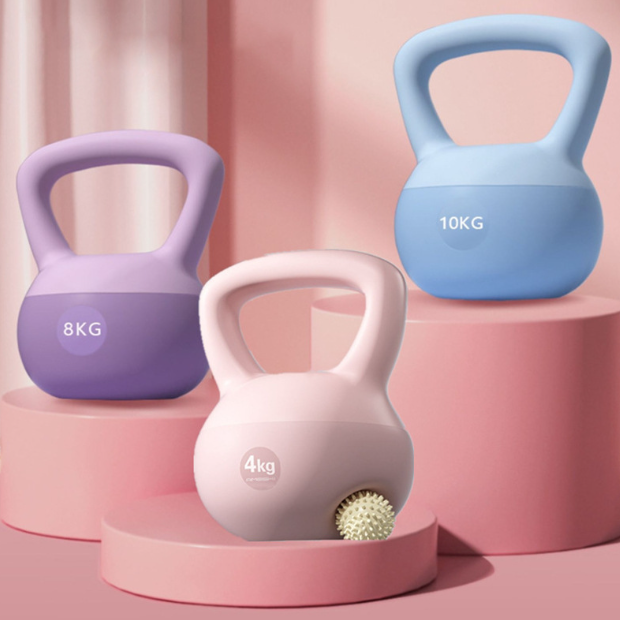
When choosing a kettlebell for home workouts or professional strength training, you may find several types on the market, including soft PVC kettlebells, sand-filled competition kettlebells, and solid cast iron kettlebells.
Although these products serve the same basic purpose, they differ in materials, dimensions, weight increments, floor protection, and training applications. Understanding these differences can help you choose the right kettlebell for your fitness goals, training environment, and experience level.
1. Soft PVC Kettlebell: A Floor-Friendly Choice for Home Workouts
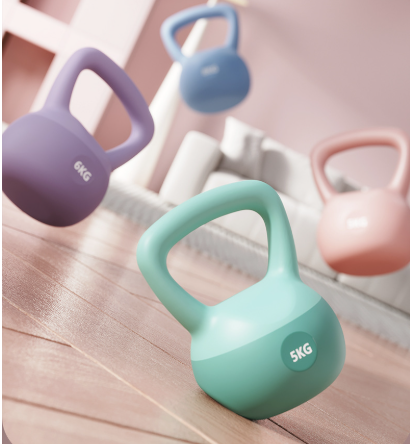
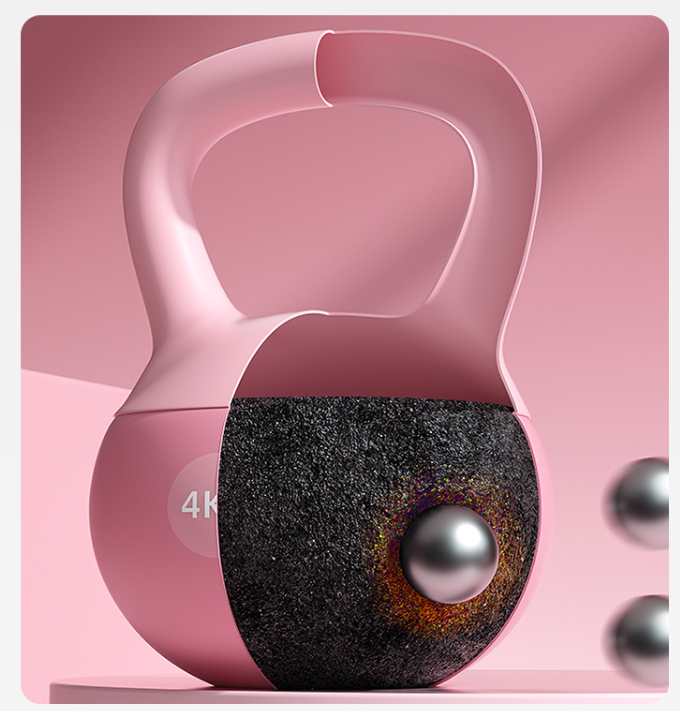
A soft kettlebell features a hollow PVC body with a flexible, soft exterior. Iron sand is filled inside the body to provide the required training weight.
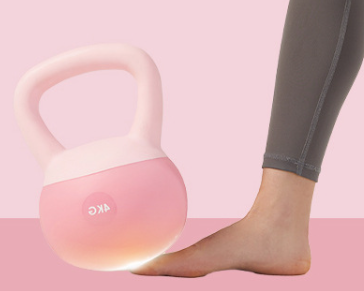
Unlike solid cast iron kettlebells, its soft outer body helps cushion accidental contact with the floor. This makes it a practical option for apartment workouts and people who are concerned about damaging their floors or injuring their feet and toes if a kettlebell is accidentally dropped.
Main Features of Soft Kettlebells
Materials and design
- Outer body: Hollow, flexible PVC.
- Filling: Iron sand.
- Handle: Solid, hard PVC with a non-slip surface.
- Weight identification: The weight is printed directly on the kettlebell body, allowing users to identify it quickly during training.
Available weights
MEDEKY Soft PVC Kettlebells are available in the following weights:
2 kg, 2.5 kg, 3 kg, 4 kg, 5 kg, 6 kg, 8 kg, 10 kg, and up to 12 kg.
Available colors
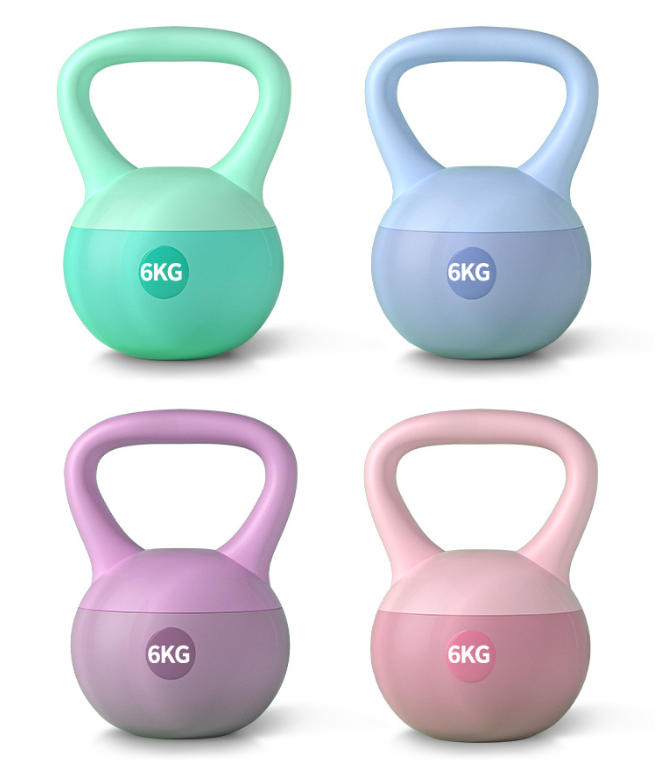
Standard colors include blue, red, pink, and orange. Custom colors are also available for customers who want to match their fitness equipment to their brand or market preferences.
Advantages of Soft Kettlebells
The main advantage of a soft kettlebell is its floor-friendly design. The flexible PVC body helps reduce the impact of accidental contact with apartment floors, including tiled floors.
It is particularly suitable for people who exercise at home and are concerned about dropping a hard weight on their feet or toes.
Soft kettlebells are also a good option for beginners and women who prefer lighter-colored fitness equipment, such as pink or other bright colors.
Disadvantages of Soft Kettlebells
One limitation is that some weight options share the same outer body size.
For example, the 2.5 kg, 3 kg, and 4 kg models use the same body size. The 5 kg and 6 kg models also share the same body dimensions. The difference in weight comes from the amount of iron sand inside, rather than a change in the external size.
Compared with cast iron kettlebells and competition kettlebells, soft kettlebells generally have a larger body.
This larger size can make overhead presses more challenging and may limit how far the kettlebell can travel toward the floor during squats and deadlifts. For users who want more demanding strength training and a greater range of movement, a cast iron kettlebell may be a better choice.
Who Should Choose a Soft Kettlebell?
A soft PVC kettlebell is particularly suitable for:
- Beginners who are learning basic kettlebell exercises.
- Apartment residents who want to reduce the risk of floor damage.
- People concerned about foot and toe injuries from accidentally dropping a weight.
- Women and home fitness users who prefer lighter-colored equipment.
- Users who mainly perform light resistance workouts.
If floor protection and a softer exterior are your main priorities, a soft kettlebell is worth considering.
2. Sand-Filled Competition Kettlebell: A Choice for Regular Training
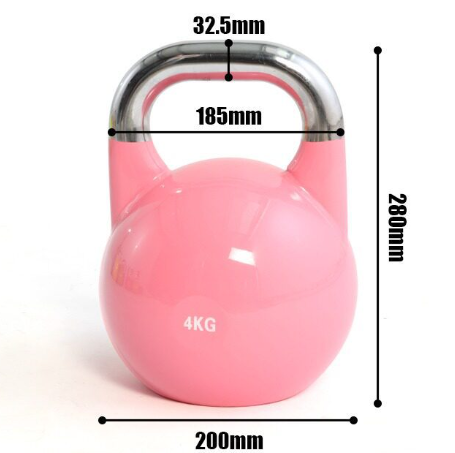
A sand-filled competition kettlebell uses a steel outer body with iron sand filling inside. It has a different construction from both soft PVC kettlebells and solid cast iron kettlebells.
Its handle is made of stainless steel and has a smooth surface designed for comfortable handling during exercise.
Main Features of Sand-Filled Competition Kettlebells
Materials and design
- Body: Steel.
- Filling: Iron sand.
- Handle: Stainless steel with a smooth surface.
Available weights
Common weight options include:
4 kg, 8 kg, 12 kg, 16 kg, and 20 kg.
Available colors
Red, blue, black, and gray.
Advantages of Sand-Filled Competition Kettlebells
Sand-filled competition kettlebells have a more performance-oriented appearance and are particularly appealing to male customers and women who train regularly at a professional or advanced level.
They can be a suitable option for users who prefer a steel kettlebell design and are comfortable working with larger weight increments.
Compared with soft PVC kettlebells, they offer a different feel and training experience. They are also suitable for use in training environments with EVA tatami mats or rubber flooring, provided the surface and equipment are appropriate for the load.
Disadvantages of Sand-Filled Competition Kettlebells
The standard weight increments are relatively large, increasing by 4 kg between the listed options. This may be inconvenient for users who prefer to increase training resistance gradually.
The steel body is also hard, so users should handle it carefully and avoid dropping it onto vulnerable flooring.
Who Should Choose a Sand-Filled Competition Kettlebell?
This type of kettlebell may be suitable for:
- Men who prefer a competition-style kettlebell appearance.
- Women who have trained regularly for a long time.
- Experienced users who can accept larger weight increments.
- Users training on suitable EVA tatami or rubber flooring.
If you are already comfortable with your current training weight and do not need small weight increases, a sand-filled competition kettlebell may be worth considering.
3. Solid Cast Iron Kettlebell: For Versatile Strength Training
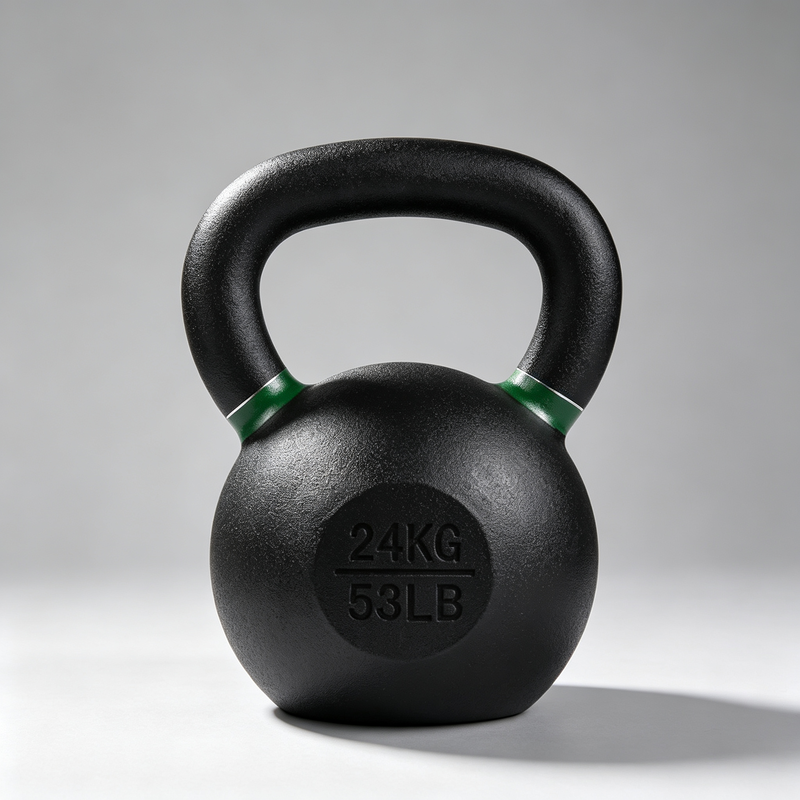
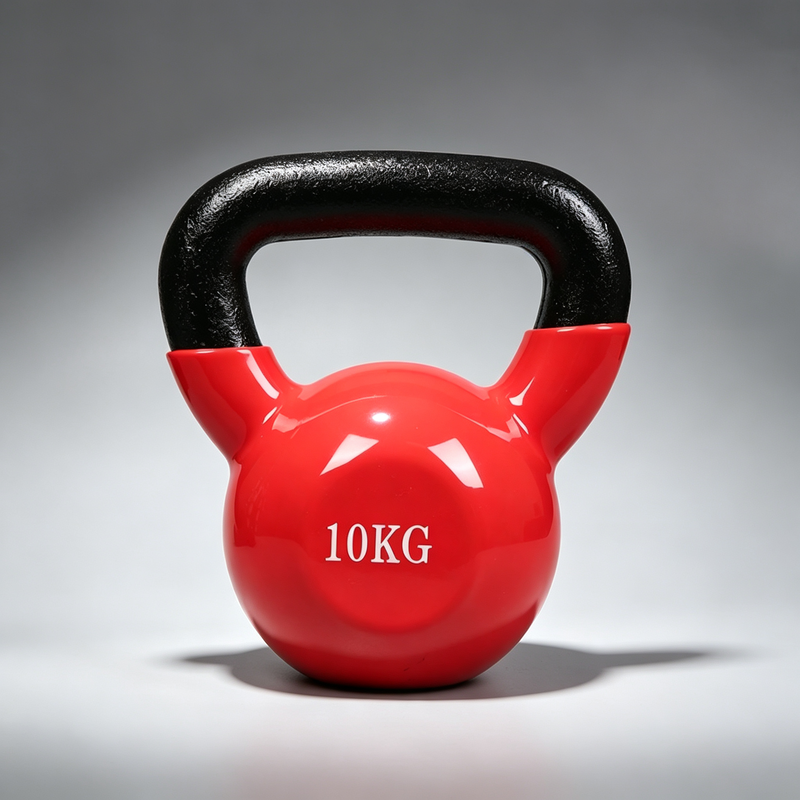
Solid cast iron kettlebells include several common styles, such as neoprene-coated kettlebells, colorful kettlebells with coated handles, and painted kettlebells.
Although their exterior finishes differ, these products share a solid cast iron construction.
Main Features of Solid Cast Iron Kettlebells
Materials and design
The kettlebell body is made of solid cast iron. Depending on the model, the exterior may feature a neoprene coating, a colored finish, or paint.
Available weights
Common weight options include:
4 kg, 6 kg, 8 kg, 10 kg, 12 kg, 14 kg, 16 kg, and 20 kg.
Compared with the listed sand-filled competition kettlebell options, solid cast iron kettlebells offer smaller weight increments, making it easier for users to progress gradually.
Advantages of Solid Cast Iron Kettlebells
One of the biggest advantages of solid cast iron kettlebells is their compact size.
For comparable training weights, they generally have a smaller body than soft PVC kettlebells. Their compact dimensions allow users to perform a wider range of kettlebell movements with fewer spatial limitations.
They are particularly suitable for people who train regularly, experienced fitness enthusiasts, and users who want to perform multiple kettlebell exercises, from basic strength movements to more advanced training routines.
The smaller body also makes them a practical choice for movements requiring the kettlebell to travel close to the body.
Disadvantages of Solid Cast Iron Kettlebells
The main disadvantage is that the hard cast iron body can damage tiled floors or other vulnerable surfaces if dropped.
Compared with soft PVC kettlebells, cast iron kettlebells are also considerably harder on contact. Users should exercise caution when handling them at home.
Solid cast iron kettlebells are also generally more expensive than soft kettlebells, which may be an important consideration for budget-conscious buyers.
Who Should Choose a Solid Cast Iron Kettlebell?
Solid cast iron kettlebells are suitable for professional or long-term fitness enthusiasts who want to perform a wide range of exercises, including:
- Kettlebell swings.
- Goblet squats.
- Kettlebell clean and press.
- Overhead presses.
- Kettlebell deadlifts.
- Kettlebell rows.
- Kettlebell lunges.
- Russian twists.
If you prioritize compact dimensions, versatile exercise options, and gradual weight progression, a solid cast iron kettlebell is a strong choice.
4. Soft Kettlebell vs Sand-Filled Competition Kettlebell vs Cast Iron Kettlebell
The following table summarizes the main differences to help you compare the three types.
| Feature | Soft PVC Kettlebell | Sand-Filled Competition Kettlebell | Solid Cast Iron Kettlebell |
|---|---|---|---|
| Main body | Flexible PVC | Steel | Solid cast iron |
| Filling | Iron sand | Iron sand | Solid metal |
| Handle | Solid PVC, non-slip surface | Smooth stainless steel | Integrated cast iron |
| Common weights | 2–12 kg | 4–20 kg | 4–20 kg |
| Weight increments | Multiple light-weight options | Generally 4 kg increments in the listed range | Generally 2 kg increments in the listed range |
| Body size | Generally larger | Competition-style design | Generally most compact |
| Floor protection | Soft body helps cushion impact | Hard steel body | Hard cast iron body |
| Main advantage | Floor-friendly design and light resistance training | Steel construction and competition-style appearance | Compact size and versatile strength training |
| Main limitation | Larger body may restrict some movements | Larger weight increments | Can damage vulnerable floors if dropped |
| Ideal users | Beginners and home fitness users | Regular trainees comfortable with larger weight increases | Experienced users and versatile strength training |
5. Which Kettlebell Is Best for You?
There is no single best kettlebell for everyone. The right choice depends on your training goals, available space, flooring, and preferred weight progression.
Choose a soft PVC kettlebell if:
You exercise in an apartment, want to reduce the risk of floor damage, are concerned about accidentally dropping a weight on your feet, or prefer lighter-colored fitness equipment.
Choose a sand-filled competition kettlebell if:
You prefer a steel competition-style design, train regularly, use suitable rubber or EVA flooring, and are comfortable with larger weight increments.
Choose a solid cast iron kettlebell if:
You train consistently and want a compact kettlebell for a wide range of movements, including swings, squats, clean and press, overhead presses, deadlifts, rows, lunges, and Russian twists.
Before choosing a kettlebell, consider not only its weight but also its body dimensions, handle material, training environment, and the exercises you plan to perform.
The best kettlebell is the one that matches your actual training needs.
Conclusion
Soft PVC kettlebells, sand-filled competition kettlebells, and solid cast iron kettlebells each serve different users.
Soft kettlebells focus on a softer exterior and floor-friendly home workouts. Sand-filled competition kettlebells offer a steel construction and competition-style appearance. Solid cast iron kettlebells provide compact dimensions and versatility for a wide range of strength-training exercises.
At MEDEKY, we understand that different customers have different training requirements. By comparing the construction, weight options, dimensions, and advantages of each type, you can choose the kettlebell that best suits your market and fitness goals.
Looking for kettlebells for your fitness equipment business? Contact MEDEKY to discuss product options, specifications, and wholesale inquiries.