
Yoga Mat Manufacturer: EVA, TPE, NBR and PVC Yoga Mats for Wholesale and OEM Customization
Different yoga mat materials offer different levels of softness, elasticity, grip, durability, and cushioning. Understanding these differences can help importers, wholesalers, distributors, and fitness brands select the right products for their target customers.
In this guide, we introduce the main features of EVA, TPE, NBR, and PVC yoga mats, their available specifications, customization options, and the factors to consider when purchasing yoga mats in bulk.
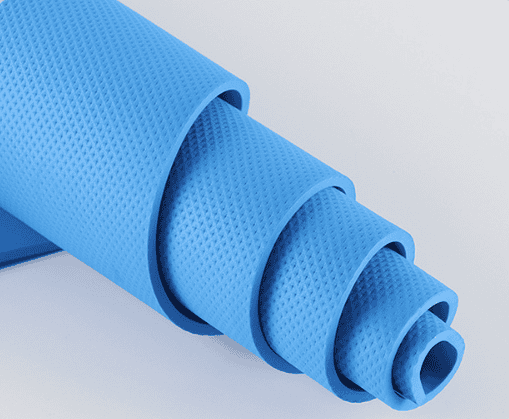
1. EVA Yoga Mats: An Economical Choice for Wholesale Buyers
EVA (Ethylene Vinyl Acetate) yoga mats are a popular option for buyers looking for lightweight, affordable fitness mats. Compared with the other materials discussed in this guide, EVA is generally the most economical raw material, making EVA yoga mats a cost-effective choice for entry-level product ranges and price-sensitive markets.
EVA Yoga Mat Specifications
Available thicknesses:
- 3 mm
- 4 mm
- 5 mm
- 6 mm
- 8 mm
- 10 mm
Available dimensions:
- 173 × 61 cm
- 183 × 61 cm
- 190 × 90 cm
Other sizes may be discussed according to your customization requirements.
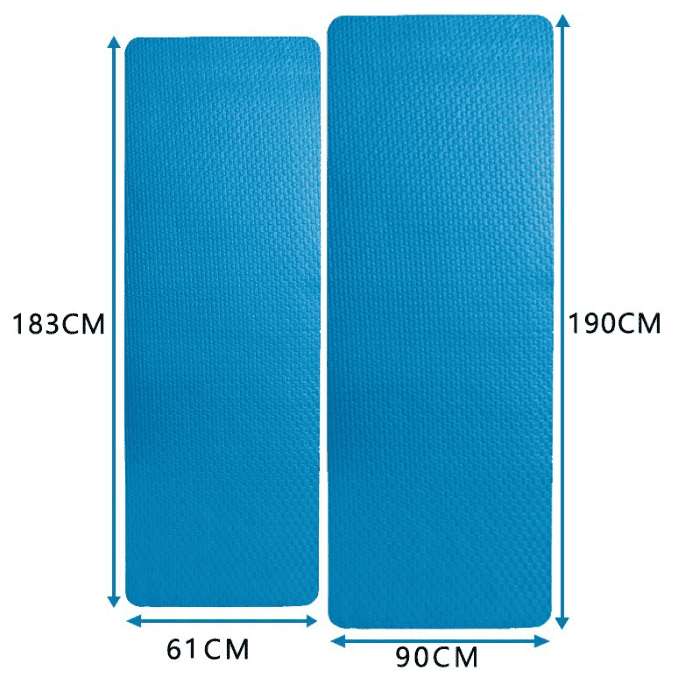
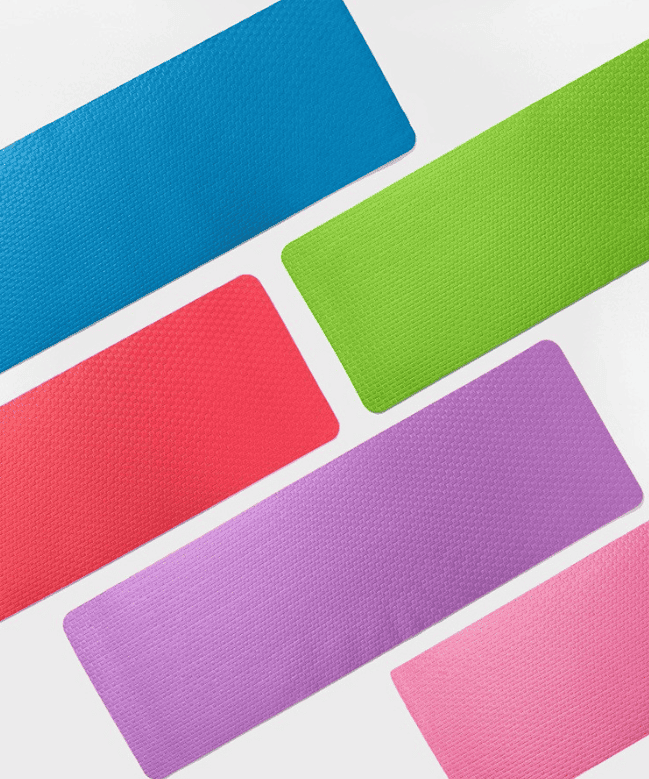
Colors: Multiple colors are available. Each individual mat is generally produced in a single color.
Surface texture: Different surface textures can be selected according to the product design.
Main Features of EVA Yoga Mats
1. Soft and lightweight
EVA yoga mats feel soft and lightweight, with a springy, foam-like texture. They are easy to carry and suitable for home workouts, stretching, and general fitness activities.
2. Economical pricing
EVA is generally less expensive than TPE and many other yoga mat materials. This makes it suitable for wholesale buyers who prioritize competitive pricing and affordable retail products.
3. Water-resistant and easy to clean
EVA foam generally has a closed-cell structure that resists water absorption. The surface is easy to wipe clean after normal use.
4. Suitable for general fitness activities
EVA yoga mats can be used for stretching, light exercise, aerobics, children’s activities, and occasional yoga practice.
What Should Buyers Know Before Choosing EVA?
EVA yoga mats may compress permanently, develop indentations, or deform after prolonged use, depending on material quality and foam density. Their grip may also be less reliable during sweaty, dynamic yoga sessions.
For this reason, EVA is generally better suited to buyers targeting affordable fitness products rather than premium yoga mats designed for demanding, high-sweat practice.
Best for: Budget-conscious retailers, entry-level fitness product lines, home exercise, stretching, and lightweight exercise mats.
2. TPE Yoga Mats: Elasticity, Comfort and Premium Appearance
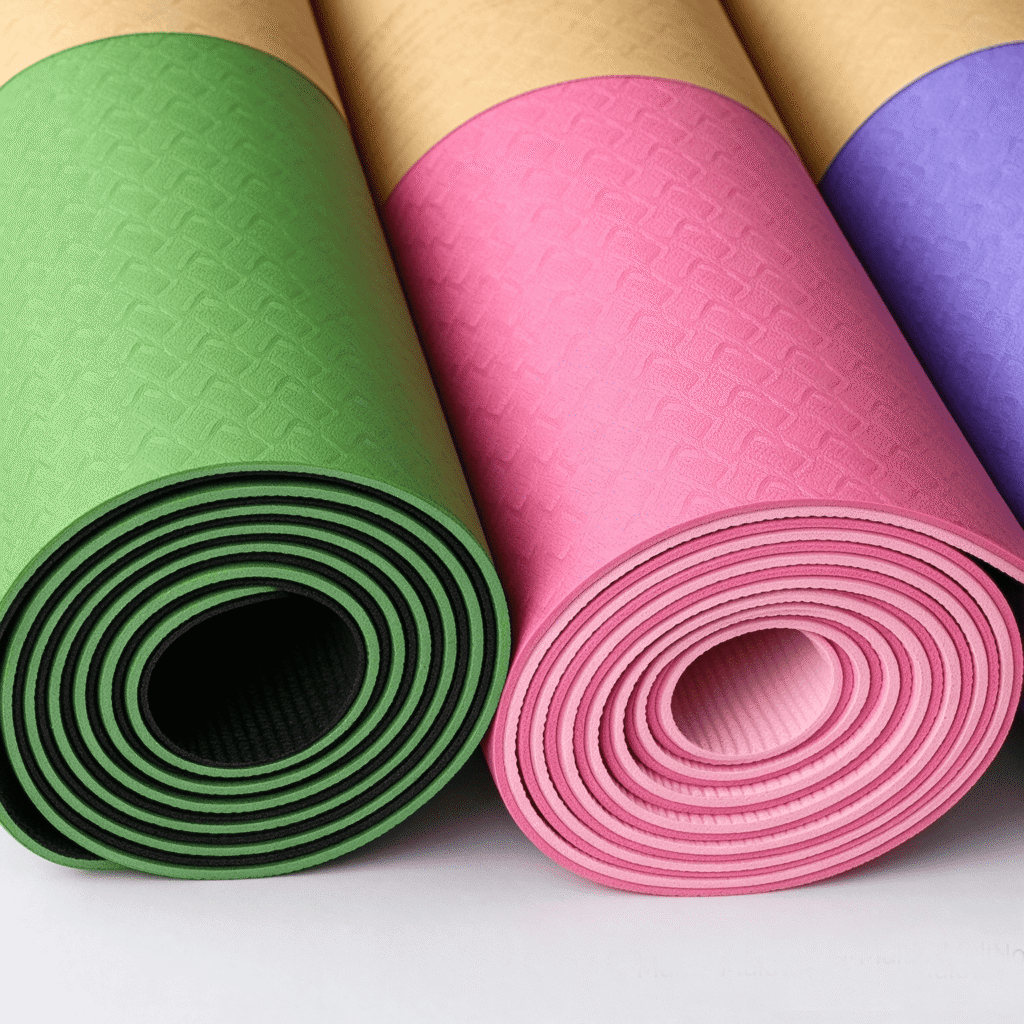
TPE (Thermoplastic Elastomer) yoga mats are designed for customers who want a balance of cushioning, elasticity, grip, and visual appeal.
Compared with ordinary EVA mats, TPE yoga mats can offer improved elasticity and recovery, depending on the formulation and manufacturing process. Their appearance and customization possibilities also make them attractive to fitness brands and retailers developing more premium product lines.
TPE Yoga Mat Specifications
Available thicknesses:
- 6 mm
- 8 mm
Available dimensions:
- 173 × 61 cm
- 183 × 61 cm
- 183 × 66 cm
- 183 × 90 cm
- 185 × 90 cm
- 200 × 100 cm
- 200 × 130 cm
- 36 × 58 cm
- 60 × 40 cm
- 80 × 60 cm
- 90 × 62 cm
- 122 × 55 cm
- 140 × 62 cm
- 150 × 55 cm
- 150 × 60 cm
If you require other dimensions for your market, contact us to discuss customized sizes.
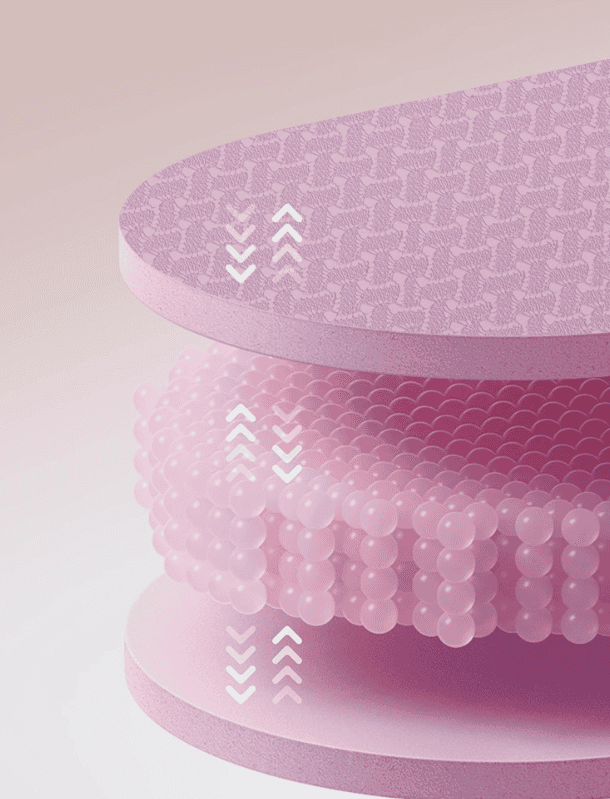
Three-Layer Construction
Our TPE yoga mat design features a three-layer composite structure:
- Top layer: A matte, textured surface designed to provide grip and a comfortable feel.
- Middle layer: A composite material structure designed to support cushioning and elasticity.
- Bottom layer: A textured, anti-slip surface designed to help the mat stay in position during exercise.
The specific structure and performance depend on the selected product model.
Main Features of TPE Yoga Mats
1. High elasticity and shape recovery
TPE yoga mats offer good elasticity. After temporary deformation during normal use, the material can recover its original shape relatively quickly, depending on material formulation and foam density.
2. Comfortable cushioning
The cushioning helps provide a comfortable exercise surface for yoga, stretching, floor workouts, and general fitness activities.
3. Attractive pastel colors
Available color options include pastel gray-green, pastel pink, and pastel purple. These light, understated colors create a clean and premium appearance that suits modern fitness brands and lifestyle-oriented product collections.
Additional colors can be discussed for customized orders.
4. Multiple surface customization methods
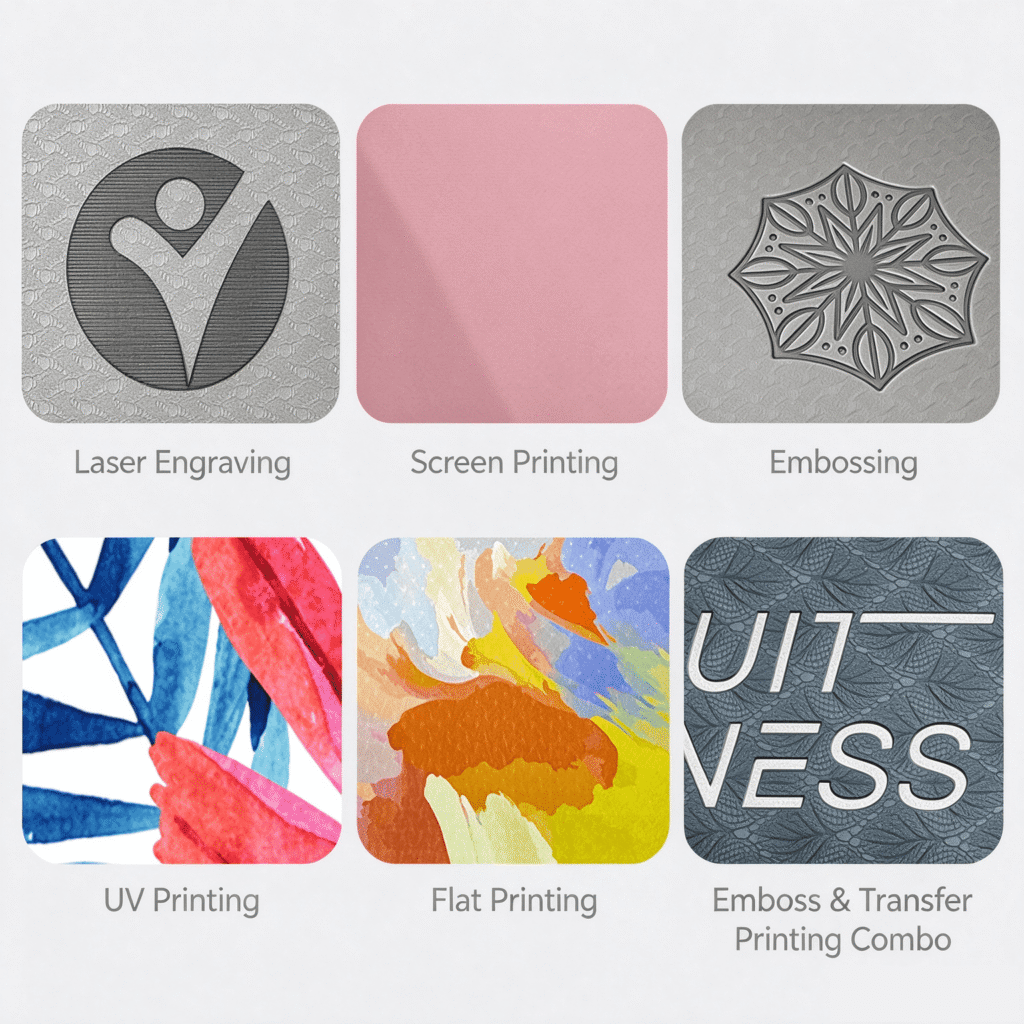
The mat surface can be customized with patterns, graphics, or brand logos. Available printing and finishing options include:
- Laser engraving
- Screen printing
- Embossing
- UV printing
- Flatbed printing
- Integrated embossing and pad printing processes
The suitability of each method depends on the selected design, material, logo details, and production requirements.
5. Skin-friendly material options
Our TPE yoga mat product offering is positioned as skin-friendly and designed without added glue in the specified construction. Selected products are described as having no noticeable odor and no formaldehyde.
For importers who require specific chemical safety or environmental compliance documentation, the exact claims should be confirmed against the relevant product specifications and test reports.
Best for: Fitness brands, online retailers, yoga product distributors, and buyers seeking a more premium appearance with flexible customization options.
3. NBR Yoga Mats: Soft, Thick and Cushioned
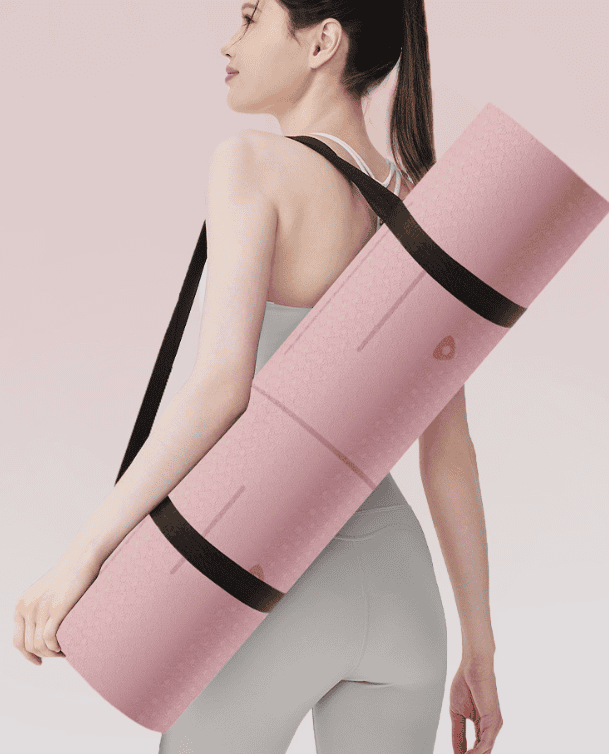
NBR (Nitrile Butadiene Rubber) yoga mats are known for their soft feel and cushioning. They can look similar to EVA mats, but NBR foam typically has larger visible foam cells and a softer texture.
Because NBR mats are available in thicker specifications, they are often considered for exercise activities where additional cushioning is important.
NBR Yoga Mat Specifications
Available dimensions:
- 183 × 61 cm
- 183 × 80 cm
- 183 × 90 cm
Available thicknesses:
- 8 mm
- 10 mm
- 15 mm
Available colors:
Blue, purple, pink, and other colors. Customized colors can be discussed according to order requirements.
Main Features of NBR Yoga Mats
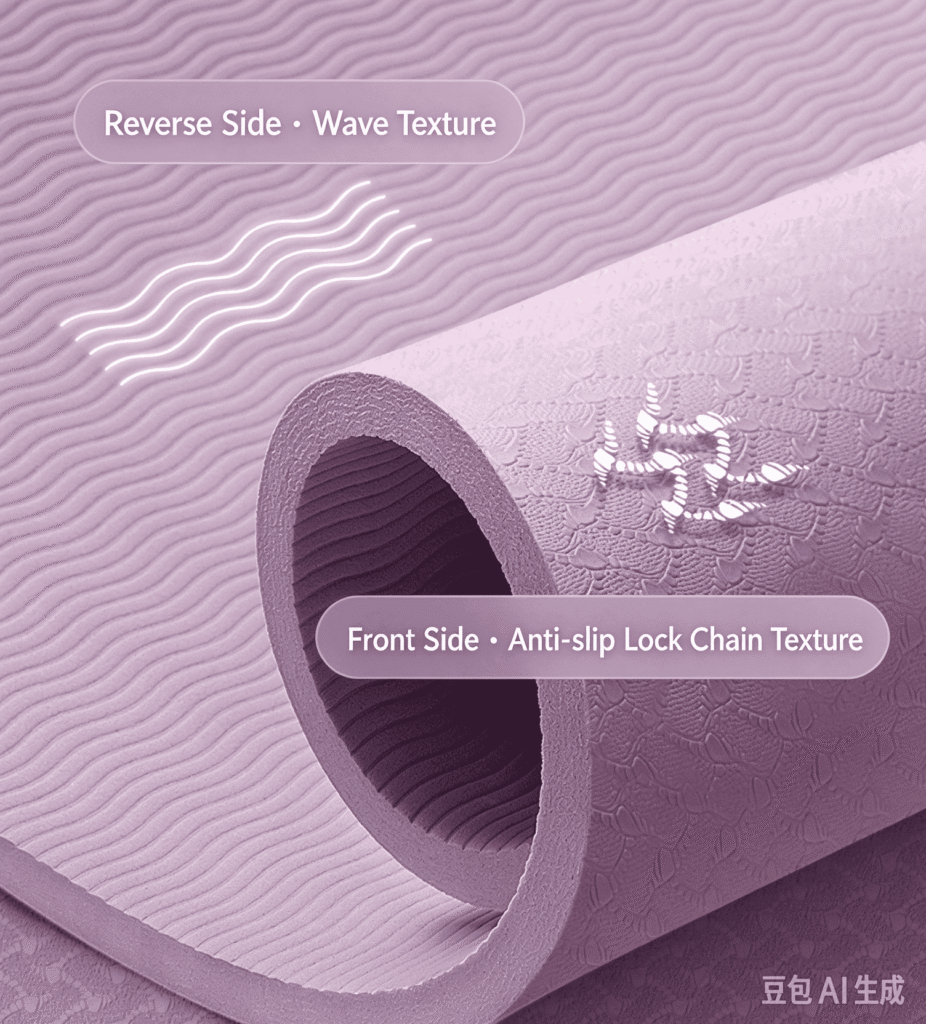
1. Soft and comfortable
NBR foam feels soft and cushioned under the body. Its thicker options can provide additional comfort for floor exercises and general fitness routines.
2. Larger foam cells
Compared with the finer appearance of some EVA foams, NBR foam generally has larger visible cells. This contributes to its distinctive soft, foam-like texture.
3. Multiple thickness options
The 8 mm, 10 mm, and 15 mm options allow buyers to select different cushioning levels for their target customers.
4. Versatile applications
NBR yoga mats can be used for:
- General fitness and body-shaping exercises
- Sit-ups and abdominal exercises
- Forearm and floor-supported exercises
- Yoga and stretching
- Outdoor fitness activities
For high-intensity yoga practice requiring strong traction, buyers should evaluate the actual grip performance of the selected NBR model.
Best for: Fitness retailers, home workout product ranges, and customers who prioritize softness and cushioning.
4. PVC Yoga Mats: Stable Support and Wear Resistance
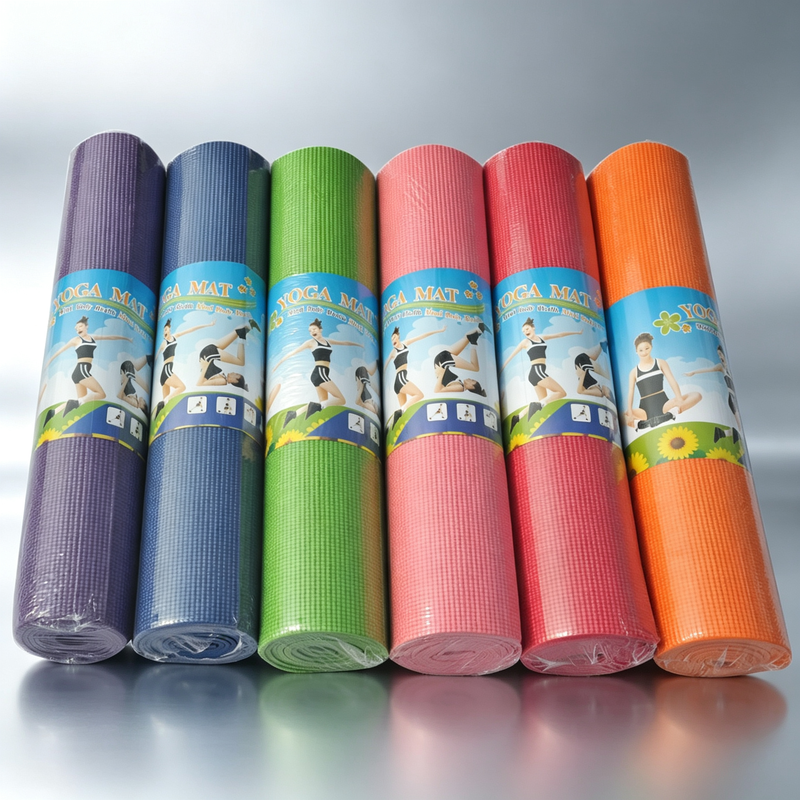
PVC (Polyvinyl Chloride) yoga mats are widely used in yoga studios, gyms, and general fitness environments. Depending on their formulation, foam density, and surface texture, PVC mats can provide a firm, stable exercise surface with good wear resistance.
For buyers seeking mats for repeated use, PVC can be an option worth considering.
Main Features of PVC Yoga Mats
1. Firm and supportive feel
PVC yoga mats can feel denser and firmer than softer EVA or NBR mats. They generally lie flat and can be less prone to curling at the edges, depending on construction and storage conditions.
2. Good wear resistance
Quality PVC mats can offer good abrasion resistance and resistance to tearing. With appropriate material quality and normal use, they may retain their shape better than lower-density foam mats.
3. Stable surface for exercise
PVC mats are often selected for static yoga, stretching, strength exercises, and shared use in fitness facilities. Their actual grip depends on the surface texture, foam construction, floor condition, and moisture.
4. Different foam structures
PVC mats can be manufactured with different foam structures. Open-cell versions may absorb sweat and require more careful cleaning and drying, while closed-cell versions generally resist moisture absorption more effectively.
5. Material quality matters
The odor and chemical profile of PVC mats can vary considerably according to the formulation, additives, and manufacturing quality. Low-quality recycled materials may have a strong odor, while better-quality formulations may have a milder smell.
PVC contains chlorine and is not readily biodegradable under ordinary disposal conditions. Buyers concerned about chemical safety and environmental requirements should request the appropriate product documentation and test reports.
Best for: Yoga studios, gyms, fitness facilities, and buyers looking for a firm exercise surface with good wear resistance.
5. EVA vs. TPE vs. NBR vs. PVC Yoga Mats: Comparison Guide
Choosing the right yoga mat material depends on your customers’ needs, target retail price, product positioning, and intended use.
| Feature | EVA | TPE | NBR | PVC |
|---|---|---|---|---|
| Main advantage | Economical and lightweight | Elasticity and premium appearance | Softness and cushioning | Firm support and wear resistance |
| Typical feel | Soft and springy | Elastic and cushioned | Very soft and foam-like | Denser and firmer |
| Thickness options in our range | 3–10 mm | 6–8 mm | 8–15 mm | Confirm by model |
| Available size choices | Standard sizes | Extensive size selection | Three listed sizes | Confirm by model |
| Customization | Multiple colors; single color per mat | Colors, patterns, logos and printing | Custom colors | Confirm by model |
| General positioning | Budget fitness mats | Mid-range to premium-style mats | Cushioned exercise mats | General-purpose and studio mats |
The table provides general guidance rather than a universal performance ranking. Actual grip, durability, odor, and cushioning depend on the individual product specification and manufacturing quality.
Which Yoga Mat Material Should You Choose?
Choose EVA if price and portability are your main priorities.
EVA is suitable for entry-level fitness mats, stretching, light workouts, and price-sensitive product lines.
Choose TPE if you want elasticity, modern colors, and branding options.
TPE is worth considering for fitness brands and retailers seeking attractive designs, customized logos, and multiple size options.
Choose NBR if softness and cushioning are important.
NBR is suitable for general floor exercises and customers who prefer thicker, softer foam mats.
Choose PVC if you need a firmer surface for repeated use.
PVC can be considered for gyms, yoga studios, and general fitness applications where support and wear resistance are priorities.
For dynamic, high-sweat yoga practice, do not select a material based on its name alone. Request a sample and evaluate grip under realistic exercise conditions. Some buyers may also consider specialized PU or rubber yoga mats for demanding grip requirements.
6. Yoga Mat OEM and Customization Services
For importers, wholesalers, distributors, and private-label fitness brands, product customization is an important part of building a competitive product range.
MEDEKY FITNESS can discuss customization requirements for different yoga mat materials and product specifications.
Custom Sizes and Thicknesses
Different markets and customer groups may prefer different dimensions and thicknesses. Our listed EVA, TPE, and NBR specifications provide a starting point for selecting suitable products.
If your required size is not listed, contact us to discuss feasibility, minimum order quantities, production costs, and lead times.
Color Customization
Color options vary by material and product model.
- EVA: Multiple colors are available, with each mat generally produced in one color.
- TPE: Pastel gray-green, pink, and purple options are available, with other colors subject to customization.
- NBR: Blue, purple, pink, and other customized colors can be discussed.
- PVC: Color and material options should be confirmed for the selected model.
For private-label projects, confirm the available colors, color-matching requirements, and minimum quantities before placing an order.
Customized Patterns and Brand Logos
For TPE yoga mats, the surface can be customized with graphics, patterns, or logos. Available processes include laser engraving, screen printing, embossing, UV printing, flatbed printing, and the specified combined embossing and pad printing process.
The best method depends on your logo, artwork, material, and desired visual effect.
Product Selection for Different Sales Channels
Different sales channels may require different yoga mat specifications:
- Online retail: Lightweight products, attractive colors, and clear product specifications.
- Fitness equipment wholesalers: Competitive pricing, repeatable specifications, and stable supply.
- Yoga studios and gyms: Appropriate grip, durability, and suitability for repeated use.
- Private-label brands: Custom logos, colors, packaging, and product differentiation.
Before mass production, we recommend confirming the material, dimensions, thickness, color, surface design, packaging, and applicable compliance requirements.
7. What Should Importers Check Before Buying Yoga Mats in Bulk?
When sourcing yoga mats from a manufacturer, price is only one part of the purchasing decision. The following factors can help reduce the risk of choosing an unsuitable product.
1. Confirm the exact material
Make sure the product is specified as EVA, TPE, NBR, or PVC. Some products may use blended formulations, so ask for the exact material description rather than relying on the product name alone.
2. Confirm thickness and dimensions
Check the finished dimensions and thickness tolerances. If your products will be sold online, accurate specifications are important for product listings and customer expectations.
3. Request samples
Evaluate softness, elasticity, surface texture, odor, grip, and shape recovery. If the mat is intended for dynamic yoga, test its stability during movement and under sweaty conditions.
4. Confirm color and logo requirements
Discuss the available colors, printing process, artwork, logo placement, and any applicable setup costs before production.
5. Check packaging requirements
Confirm whether you need individual packaging, color boxes, labels, barcodes, or customized retail packaging. Packaging specifications should be agreed upon before the order is finalized.
6. Request relevant quality and compliance documents
If you sell into regulated markets or supply commercial fitness facilities, confirm which chemical safety, material, and product documentation is available and which standards apply to your product.
7. Confirm MOQ, lead time, and shipping terms
Before placing a bulk order, request the minimum order quantity, production lead time, sample arrangements, quotation validity, and applicable shipping terms.
8. Frequently Asked Questions About Yoga Mats
Q1. What is the difference between EVA and TPE yoga mats?
EVA yoga mats are generally more economical and lightweight, making them suitable for entry-level fitness products. TPE yoga mats can offer a combination of elasticity, cushioning, and attractive color options. TPE models also offer extensive size and surface customization possibilities.
The best choice depends on the required price point, material formulation, and target customers.
Q2. Which yoga mat material is the cheapest?
Among EVA, TPE, NBR, and PVC, EVA is generally the most economical raw material in our product comparison. However, the final unit price also depends on thickness, dimensions, density, material grade, printing, packaging, and order quantity.
Q3. What thicknesses are available for EVA yoga mats?
Our listed EVA yoga mat thicknesses are 3 mm, 4 mm, 5 mm, 6 mm, 8 mm, and 10 mm.
Q4. What sizes are available for TPE yoga mats?
Our listed TPE sizes range from small exercise mats, such as 36 × 58 cm, to larger formats, including 200 × 130 cm. Standard options also include 173 × 61 cm, 183 × 61 cm, 183 × 66 cm, and several other sizes. Custom dimensions can be discussed.
Q5. Can I customize yoga mat colors and logos?
Yes, customization options depend on the selected material and model. EVA and NBR offer color options, while TPE supports surface patterns and several printing or finishing processes. Please provide your preferred color, logo artwork, dimensions, and estimated order quantity for confirmation.
Q6. Are TPE yoga mats odor-free?
Our specified TPE product offering is described as having no noticeable odor. Actual odor can depend on the formulation, manufacturing process, and storage conditions. If odor requirements are critical, request a sample and confirm the relevant material documentation before ordering.
Q7. Which yoga mat is best for gyms and yoga studios?
PVC can be a suitable option when a firmer surface and wear resistance are priorities. TPE may appeal to studios seeking a more premium appearance, while EVA and NBR may be appropriate for different budget and cushioning requirements. The final choice should be based on grip tests, durability, cleaning requirements, and the intended type of exercise.
Q8. Can MEDEKY supply customized yoga mats for wholesale orders?
We can discuss your requirements for material, dimensions, thickness, colors, patterns, logos, and packaging. Please contact our team to confirm the available specifications, MOQ, pricing, and production lead time for your selected model.
9. MEDEKY FITNESS for Yoga Mat Wholesale and OEM Inquiries
MEDEKY FITNESS supplies fitness equipment for international buyers seeking products for wholesale distribution, retail sales, and private-label projects.
If you are sourcing EVA, TPE, NBR, or PVC yoga mats, share your target material, required dimensions, thickness, color, logo design, and estimated order quantity with our team.
We can help you identify suitable product options and discuss customization requirements for your market.
Visit MEDEKY FITNESS to explore more fitness equipment products and discuss your sourcing requirements.

Jelly
Email:jelly@medekyfitness.com
Whatsapp:+86 15257931634